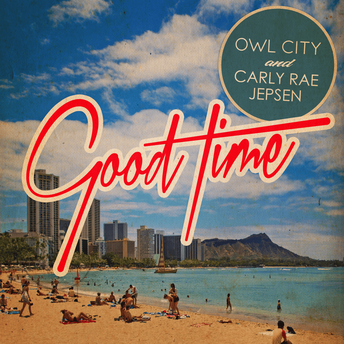
"Good Time" stands as a monumental crossover milestone in early-2010s mainstream electropop, written and produced by Adam Young (Owl City) in collaboration with songwriters Brian Lee and Matthew Thiessen (Relient K), featuring Canadian pop sensation Carly Rae Jepsen. Serving as the lead single from Owl City's fourth studio album The Midsummer Station (2012) and appearing on Jepsen's sophomore international record Kiss, the track engineered a brilliant convergence between DIY bedroom indietronica and immaculate radio-ready dance-pop, immortalizing the carefree summer optimism of its decade.
Thematic Architecture: The Philosophy of Effortless Joy
Radical Innocence as Counter-Cultural Narrative: Released during an era when commercial dance music frequently leaned into hedonistic excess, melancholic EDM longing, or aggressive club escapism, "Good Time" distinguished itself through radical, wholesome innocence. The composition completely sidesteps cynical posturing. Happiness is presented not as a hard-fought reward or an alcohol-fueled mirage, but as an immediate, unconditional emotional posture available to anyone willing to embrace the present.
The Deconstruction of Time and Space: The lyrical thesis is crystallised in the pre-chorus paradox: "Good morning and goodnight, I wake up at twilight." Standard industrial and societal timekeeping is gleefully suspended. Daylight and dusk collapse into a unified continuum of celebration. This temporal liberation is reinforced during the bridge chants ("doesn't matter when... doesn't matter where"), transforming the "good time" into a nomadic psychological sanctuary unaffected by geographic coordinates or rigid schedules.
Everyday Mishaps as Comedic Catharsis: In Verse 2, Carly Rae Jepsen frames everyday micro-disasters—dropping a smartphone into a swimming pool, scrambling through hotel checkouts, and rushing to cash machines—not as paralyzing anxieties, but as trivial, laughable anecdotes. By casually brushing off modern administrative friction in favor of spontaneous communal connection, the lyricism asserts human intimacy over material convenience.
Acoustic-Electronic Hybridization and Vocal Synergy
Folk-Pop Strums Embedded in Electro-House Shells: The architectural genius of the arrangement lies in its hybrid sonic texture. The track opens organically with a bright, percussive acoustic guitar strum before seamlessly integrating a driving four-on-the-floor kick drum, shimmering arpeggiated synth bells, and a pulsing saw-tooth synth-bass. This acoustic-electronic juxtaposition yields warmth and organic accessibility while maintaining sufficient low-end power to dominate festival sound systems.
Vocal Timbral Contrast and Harmonic Complements: The dialogue between Adam Young and Carly Rae Jepsen offers a masterclass in pop complementary coloring. Young's signature Midwestern nasal tone—characterized by airy phrasing, light pitch modulation, and bedroom-pop intimacy—creates an engaging foil for Jepsen's breezy, chest-dominant resonance and athletic dynamic projections. Rather than competing for vocal dominance, they weave in and out of unison phrases and sparkling octave harmonies.
The Minneapolis Youth Chorus and Communal Singalong Dynamics: The climactic chorus hook is augmented by the Minneapolis Youth Chorus, introducing genuine multi-generational gang vocals. The anthemic "Woah-oh-oh-oh-oh" refrains mimic traditional campfire folk choruses, elevating the song from a localized commercial single into an inclusive, stadium-scaled communal chant.
Historical Trajectory and Enduring Cultural Resonance
Achieving double-platinum status in the United States and dominating international charts across North America, Europe, and Asia, "Good Time" proved that uninhibited sunshine pop could command global streaming and broadcast airwaves without succumbing to cynicism. Over a decade after its release, music historians recognize the track as the definitive zenith of optimistic electropop—a masterfully crafted burst of sonic sunshine celebrating the enduring human capacity for spontaneous camaraderie.