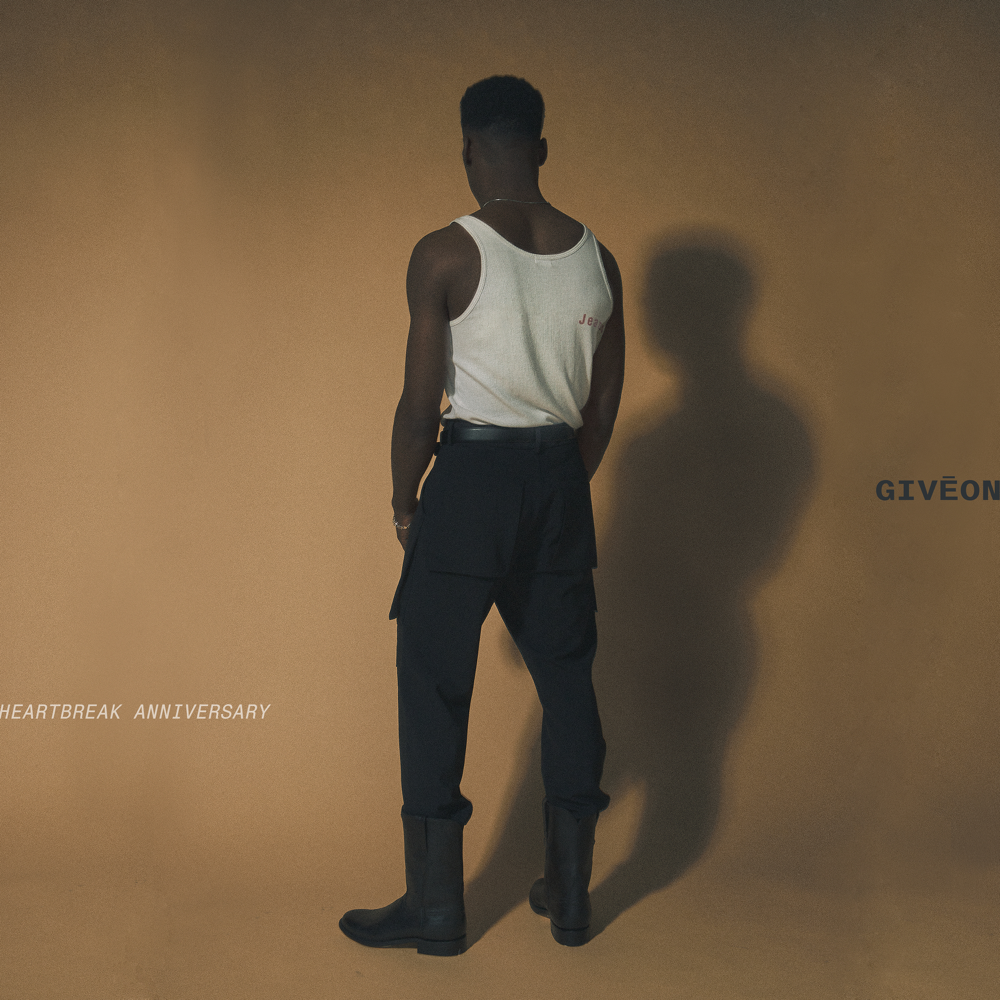
GIVĒON's breakout single invented a calendar nobody wanted: the heartbreak anniversary, the date that renews itself annually like a subscription. Over sparse, swinging soul, his velvet baritone performs grief as ritual — and in doing so, announced a new classic voice in R&B.
Grief as Recurring Appointment
The concept's originality is temporal. Breakup songs usually occupy a moment; this one occupies a date that returns. Verse details — deflated balloons, unread messages 'you read', souvenirs that stare — are arranged like exhibits in an anniversary shrine. The pre-chorus's logic ('the day I thought forever... that'll last for never') is a vow autopsy, and the chorus question — 'do you ever think of me?' — asks for the cruelest gift: proof of symmetry in suffering.
The Baritone Arch
Production by Sevn Thomas and Maneesh keeps a cupped-hands jazz-soul loop beneath GIVĒON's voice, letting his lower register do the melodic heavy lifting. His phrasing climbs from spoken intimacy to a controlled falsetto crack at the bridge — the sonic equivalent of composure failing for exactly one note. The restraint is the drama; nothing else in the track is allowed to emote.
Context and Impact
Released in 2020 and propelled by the EP 'Take Time', the song earned Grammy nominations and made GIVĒON the rare debut artist whose signature instrument is low-register storytelling. Its hook entered the culture as shorthand for recurring grief — proof that R&B's future was being written an octave lower.