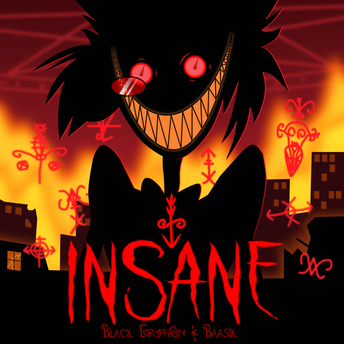
"Insane" is an explosive, viral masterclass in electro-swing and dark synth-rock, conceived and recorded in 2021 by American vocalist/animator Gabriel Brown (Black Gryph0n) in collaboration with his brother, multi-instrumentalist music producer Nathanael Brown (Baasik). Composed as an evocative character study of Alastor the "Radio Demon" from Vivienne Medrano's (VivziePop) indie animated phenomenon Hazbin Hotel, the track transposes the macabre charisma of a 1930s Southern serial killer into a high-octane modern electronic showcase, redefining the boundaries of indie animated fan compositions.
Narrative Hermeneutics: The Aesthetics of Sadistic Entertainment
Entertainment as Existential Philosophy: At the thematic center of "Insane" lies Alastor's chilling ethos: pain is meaningless unless broadcast for amusement. His introductory greeting ("Dearly beloved, for your entertainment...") sets the tone of a grand carnival barker or vaudeville radio broadcaster presiding over a slaughterhouse. Damnation is framed not as punitive torment, but as an unrestricted theatrical stage. By casually dismissing his earthly atrocities as mere "high school" antics and declaring his infernal debut as "going for my degree," Alastor revels in moral inversion, celebrating malice as high art.
The Rhetorical Mask of Polite Empathy: The chorus encapsulates the core paradox of Alastor's character. He performs superficial gentlemanly manners ("I promise, honey, I can feel your pain") only to subvert them with sadistic glee ("And maybe I enjoy it just a little bit"). The titular rhetorical interrogation, "Does that make me insane?", is delivered not as a plea for validation or a confession of guilt, but as a playful boast. His cruelty is calculating, self-aware, and utterly divorced from remorse.
The Threat Beneath the Grin: In Verse 2, Alastor feigns nostalgic warmth toward an old acquaintance or former victim, mimicking the pleasant banter of an old-time radio host. This veneer shatters abruptly with the whispered clinical inquiry: "Tell me, do you demons bleed?" The line exposes the terror of his presence in the underworld: a freshly arrived human soul capable of toppling entrenched demonic hierarchies through sheer, methodical violence.
Harmonic Architecture, Electro-Swing Dynamics, and Sound Design
Syncopated Jazz Age Horns over Modern Industrial Drops: Baasik constructs the arrangement upon the foundational collision of two distinct acoustic eras. The rhythm track channels the frenetic energy of 1920s Charleston and Dixieland swing, propelled by muted muted-trumpet stabs, walking basslines, and syncopated big-band brass riffs. However, this vintage veneer is systematically fractured by massive modern electronic production: distorted 808 sub-bass, aggressive dubstep-inspired growls, and heavy industrial beat drops during the instrumental breaks.
Acoustic Spatialization and Radio-Frequency Processing: The sound engineering deliberately incorporates analog artifacts—vinyl surface crackle, magnetic tape hiss, and narrow band-pass EQ filtering—mimicking the acoustic signature of early AM radio transmitters. Gabriel Brown's vocals transition seamlessly between dry, close-mic intimacies and heavily filtered megaphone distortions, aurally manifesting Alastor’s broadcast-based demonic aura.
Vocal Virtuosity and Theatrical Phrasing: Gabriel Brown delivers a vocal tour de force, leveraging rapid-fire syncopated syllables, manic operatic vibrato, theatrical speech-level singing, and chilling guttural laughter. His dynamic range encompasses bright, seductive Broadway tenor belts and razor-sharp, mocking sibilance, capturing the character's unhinged elegance with surgical precision.
Cultural Impact and Legacy in Digital Fan Culture
Accumulating hundreds of millions of streams across YouTube, Spotify, and TikTok, "Insane" emerged as one of the most successful independent animation tribute tracks in internet history. It solidified Black Gryph0n and Baasik's status as pioneering independent creators while establishing a benchmark for how indie animators and musicians can organically co-create viral cultural phenomena outside traditional Hollywood studio ecosystems.