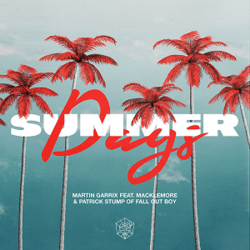
"Summer Days" is an exhilarating cross-genre triumvirate released in April 2019, uniting Dutch progressive house titan Martin Garrix, Fall Out Boy lead vocalist Patrick Stump, and multi-platinum Seattle hip-hop lyricist Macklemore (Ben Haggerty). Breaking dramatically from Garrix's signature festival big-room synthesizers, the track explores a breezy intersection of retro 1970s electro-funk, post-disco bounce, and contemporary dance-pop, establishing an infectious modern tribute to warm seasons, immediate infatuation, and reciprocal emotional healing.
Thematic Hermeneutics: The Broken Healers of Summer
Deconstructing Superficial Validation: The lyrical narrative opens through Patrick Stump's high-spirited, tender delivery in Verse 1 and the Pre-Chorus. The narrator contemplates an early morning reverie where his partner's unadorned beauty shines effortlessly ("She looks good in the morning and she don't even know it"). The instruction—"Don't look in the mirror, look into my eyes; when you see your reflection, you'll see what I like"—serves as a poetic subversion of contemporary cosmetic self-consciousness, prioritizing intimate reciprocal affirmation over artificial societal standards.
Sun-Drenched Imagery and Road-Trip Escapism: Macklemore's verses infuse the track with sun-soaked, cinematic storytelling: open-top convertibles, floral sundresses, star-gazing beneath night skies, and coastal getaways. However, beneath the carefree summer holiday aesthetic lies surprising narrative gravitas. The verse culminates in the poignant thesis: "You could look in my eyes, see I'm some mess / Couple of broken people trying to complete each other under one breath." The track transcends the triviality of a fleeting summer romance, reframing the seasonal encounter as an authentic sanctuary of mutual psychological restoration.
Instrumental Architecture, Bassline Kinetics, and Groove Ecology
The Primacy of the Slap-Bass Line: The sonic engine of "Summer Days" is governed by an elastic, percussive electric slap-bass riff that recalls the golden era of Nile Rodgers and Bernard Edwards (Chic), filtered through modern digital punch. The bassline drives the rhythmic pocket with infectious syncopation, ducking dynamically beneath a tight, four-on-the-floor kick drum and crisp handclaps. By keeping the sub-bass clean and articulate, Garrix creates a bouncy, organic dancefloor framework that leaves ample acoustic room for vocal counterpoint.
Analog Brass Stabs and Rhythm Guitar Accents: Interspersed throughout the instrumental drop and chorus transitions are bright analog synthesizer brass hits and muted single-coil rhythm guitar strums. This hybrid acoustic-electronic production yields a nostalgic vinyl warmth while preserving the razor-sharp transient response required for modern high-definition streaming and radio broadcast.
Vocal Complementarity and Harmonic Contrast: The track thrives upon the dynamic polarity of its vocalists. Patrick Stump delivers a masterclass in blue-eyed soul and pop-punk vocal agility, executing bright, resonant chest belts and soaring falsetto hooks that supply the track's euphoric emotional core. In counterpoint, Macklemore offers an effortless, conversational baritone flow characterized by relaxed rhythmic cadence and self-deprecating wit. The intersection of Stump’s melodic heights and Macklemore’s narrative earthiness creates a vibrant, multi-dimensional sonic dialogue.
Cultural Landmark and Contemporary Significance
Accumulating hundreds of millions of global streams and dominating international airplay charts throughout the summer of 2019, "Summer Days" demonstrated Martin Garrix's extraordinary stylistic versatility as an auteur capable of conquering organic funk and dance-pop landscapes. By uniting pop-punk vocal royalty, narrative hip-hop craftsmanship, and Dutch electronic precision, the track endures as a quintessential anthem of seasonal optimism, celebrating the healing power of connection under the summer sun.